
Muira Puama and Catuaba in Jellyfil: Brazilian Barks, Honest Evidence
Muira puama and catuaba are Brazilian tree barks long used as folk tonics for men. Clinical evidence for muira puama alone is lacking, and catuaba's human evidence is limited. Older muira puama reports used 1–1.5 g a day. In Jellyfil, both share an 82 mg blend with seven other ingredients, and their amounts are not published.
What are the muira puama and catuaba in Jellyfil?
Two Brazilian barks with an old reputation and little modern data.
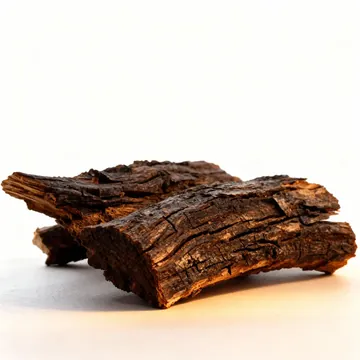
Muira puama and catuaba are two tree barks from Brazil. Both appear in the 82 mg blend inside each Jellyfil gummy, listed as muira puama extract and catuaba extract.
In Brazil they have a long folk reputation as tonics for men, often called "aphrodisiac" barks. That reputation is the reason they show up in men's wellness products.
The short version: the tradition is old, the human research is thin, and the amount in each gummy is not published. The rest of this page explains each point. For all nine blend ingredients, see the Jellyfil ingredients page.
- Type
- Tree barktwo species groups
- Origin
- Brazilfolk tonics
- Amount in Jellyfil
- Not publishedpart of 82 mg
Where do muira puama and catuaba come from?
Different trees, same region, same folk role.
They come from different trees, but they share a home and a story. Here is each one in brief.
- Plant
- Ptychopetalum trees, mainly Ptychopetalum olacoides
- Where it grows
- The Amazon region of Brazil
- Part used
- Bark and root
- Folk names
- Sometimes called "potency wood"
- On the Jellyfil label
- Muira puama extract; species not stated
- Plant
- A trade name used for several different trees
- Where it grows
- Brazil
- Part used
- Bark
- Key problem
- The name does not point to one fixed species
- On the Jellyfil label
- Catuaba extract; species not stated
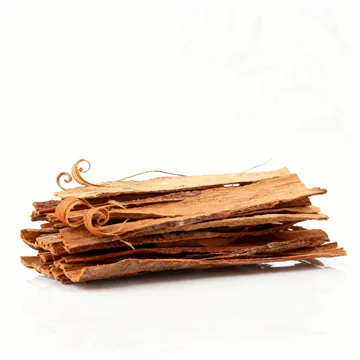
Neither line on the label names a species or a standard. That matters more for catuaba than for most herbs, as a later section shows.
How were muira puama and catuaba used traditionally?
Teas and tonics first. Concentrated extracts much later.
Both barks were used in Brazilian folk practice as general tonics. People brewed them as teas or soaked them in alcohol, and took them for tiredness, low spirits and male vitality.
Folk use tells you what people hoped a plant would do. It does not tell you the right dose, whether it works better than a placebo, or whether it is safe with modern medicines. Here is how a bark gets from forest to gummy.
- 1
Bark is harvested
Pieces of bark or root are collected and dried.
- 2
An extract is made
Water or alcohol draws out compounds; the liquid is dried to a powder.
- 3
It joins the blend
The extract is mixed with seven other ingredients and caffeine into one 82 mg blend.
- 4
One gummy a day
The label serving is 1 gummy once daily.

Ready to try Jellyfil?
Best value$49 a bottle · $294 for 6
What does the research say about muira puama and catuaba?
Old reports, no quality trials, no proven dose.
Not much. A professional monograph says clinical evidence for muira puama alone is lacking and there are no quality trials to guide dosing (Drugs.com, Muira puama, 2026). For catuaba, human evidence is limited and benefits are not well defined (WebMD, Catuaba, 2026).
The human evidence at a glance
| Question | Muira puama | Catuaba |
|---|---|---|
| Placebo-controlled trials alone | None of quality | None well established |
| Older human reports | Uncontrolled; 1–1.5 g a day for 2 weeks | Limited |
| Combination studies | One 3-month pilot, 500 mg a day in a mix | Not established |
| Established human dose | No | No |
| Side-effect data | Lacking | Limited |
Older muira puama reports gave men 1 to 1.5 g a day of extract with no placebo group. Without a comparison group, it is hard to tell a real effect from hope and time.
Results from mixed formulas also do not show which ingredient did what. The FTC says ingredient studies only support a product claim when dose, formula and population match (FTC Health Products Compliance Guidance, 2022). No study has tested Jellyfil.
How much muira puama and catuaba is in Jellyfil?
Unknown, but small by any reading of the label.
The label does not say. The two barks are part of an 82 mg blend shared by nine ingredients. Only caffeine, at 5 mg, has its own number. Simple math gives a range.
Muira puama amounts (bar = share of 1,500 mg)
Even if the entire blend were muira puama, it would be about 5 to 8% of the older report doses. At an even split, it is under 1%. Catuaba has no human dose to compare with at all.
The footnote's "about 567 mg of dry powders" refers to the plant used to make all nine extracts, not to these two barks. The supplement facts page explains it.
Is catuaba always catuaba?
One name, several trees, and a known adulteration problem.
Not reliably. Several different plants are sold under the name. An independent analysis found many catuaba products did not contain the labeled species. Some held tropane alkaloids, a group of strong plant chemicals, or unlisted prescription drugs (WebMD, Catuaba, 2026).
This fits a wider pattern. FDA flagged 353 sexual-enhancement supplements over ten years, and 47% of those contained sildenafil (Tucker et al., 2018). Jellyfil lists no drug, but no independent lab certificate has been published yet.
So buy only through the real checkout, keep the bottle and note the lot number. Our post on hidden drugs in sexual supplements explains the warning signs.
Muira puama and catuaba side effects: who should be careful?
Four questions. Nothing is saved or sent.
Side effects are poorly studied for both barks. Nervousness and agitation are possible with muira puama (Drugs.com, Muira puama, 2026). Answer these four questions for a quick check.
The full safety picture for all nine ingredients is on the Jellyfil side effects page. If ED is the reason you are reading, see when ED means a doctor visit.
Muira puama and catuaba in Jellyfil: the honest bottom line
Interesting history, thin science, tiny unknown amounts.
What works in their favor
- Long folk use in Brazil as men's tonics
- Small amounts, part of an 82 mg blend
- Simple routine: part of 1 gummy a day
- Paired with better-studied ingredients such as L-arginine and maca
What holds them back
- No quality trials for either bark alone
- No proven human dose
- Amounts in each gummy not published
- Catuaba species not named on the label
Think of these two barks as tradition, not evidence. If you try Jellyfil, judge it by how you feel over the label routine, and keep your doctor in the loop. The maca page covers the next most-studied herb in the blend.
Muira puama and catuaba questions
What are the benefits of muira puama for men?
Muira puama is sold for male vitality and desire, but clinical evidence for it alone is lacking (Drugs.com, Muira puama, 2026). The best-known reports are older and had no placebo group. Any benefit is unproven, not ruled out.
What is catuaba bark good for?
Catuaba is a traditional Brazilian tonic for tiredness and male vitality. Human evidence is limited and its benefits are not well defined (WebMD, Catuaba, 2026). Most claims come from folk use, not trials.
What are the side effects of muira puama?
Good side-effect data are lacking. Nervousness and agitation are possible, and interactions are not well documented (Drugs.com, Muira puama, 2026). Stop it and talk to a doctor if you feel unwell.
Is muira puama dangerous?
No serious danger is well documented, but that is partly because it has been studied so little. Pregnant or nursing people should avoid it. In Jellyfil the amount is small and part of an 82 mg blend.
What is the muira puama dosage?
There is no proven dose. Older uncontrolled reports used 1 to 1.5 g of extract a day (Drugs.com, Muira puama, 2026). Jellyfil's whole nine-ingredient blend is 82 mg, so its share is a small fraction of that.
What are the side effects of catuaba bark?
Side effects are poorly studied. The bigger worry is identity: several plants are sold as catuaba, and some products tested held other plants or unlisted drugs (WebMD, Catuaba, 2026). Ask a pharmacist first if you take an antidepressant.
Can I take catuaba bark before bed?
No study looked at timing. Jellyfil's label says 1 gummy once daily, at any time. Each gummy also has 5 mg of caffeine, so a morning gummy is the easy choice if caffeine keeps you up.
How much muira puama is in Jellyfil?
The label does not say. Muira puama and catuaba are two of nine ingredients that share 82 mg, which is about 9 mg each on average.
What is the difference between muira puama and catuaba?
They are different trees. Muira puama comes from the Ptychopetalum tree. Catuaba is a trade name used for bark from several different trees. Both are Brazilian folk tonics, which is why they are often sold together.
Ready to try Jellyfil?
Order from the U.S. authorized merchant, keep your order email, and you are covered by the 60-day money-back guarantee. Questions first? Call +1 (507) 448-8190.
- Secure checkout
- 60-day money-back window
- Ships from the US
- Tracking by email

Keep reading
Ingredients
All nine blend ingredients, the gummy base and how 82 mg compares with research doses.
Read more →Maca
Maca's desire studies, the gram-level doses they used and the small share inside each gummy.
Read more →Side effects
Stomach, caffeine, blood pressure, liver, thyroid, interactions and hidden-drug risk.
Read more →